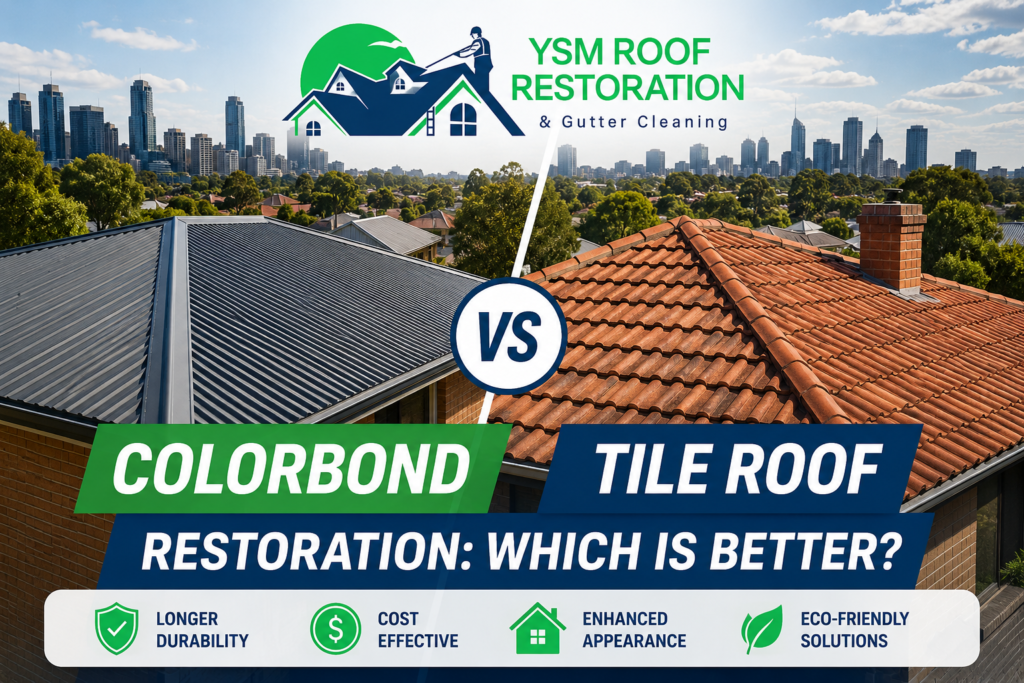
When it comes to protecting your home and maintaining its value, your roof plays a crucial role. Over time, exposure to Melbourne’s unpredictable weather conditions, including heavy rain, strong winds, intense UV rays, and temperature fluctuations, can cause roofing materials to deteriorate. This is where roof restoration becomes essential.
One of the most common questions homeowners ask is: “Should I restore my Colorbond roof or my tile roof, and which option is better?” The answer depends on several factors, including durability, maintenance requirements, aesthetics, cost, and long-term performance.
In this guide, we’ll compare Colorbond and tile roof restoration in detail to help you determine the best choice for your Melbourne property.
Understanding Roof Restoration
Roof restoration involves repairing, cleaning, and rejuvenating an existing roof to improve its appearance, functionality, and lifespan. Unlike a complete roof replacement, restoration focuses on extending the life of your current roof while addressing damage and wear.
Typical roof restoration services include:
- Roof inspection
- Pressure cleaning
- Roof repairs
- Rebedding and repointing
- Rust treatment
- Roof sealing
- Roof painting or coating
- Gutter cleaning and maintenance
Both Colorbond and tile roofs can benefit significantly from professional restoration services.
What Is a Colorbond Roof?
Colorbond roofing is manufactured from high-quality steel and coated with a durable painted finish designed specifically for Australian conditions. It has become increasingly popular due to its modern appearance, strength, and low maintenance requirements.
Advantages of Colorbond Roofing
- Lightweight construction
- Modern aesthetic appeal
- Resistant to termites
- Fire-resistant properties
- Excellent durability
- Available in various colours
- Suitable for contemporary homes
While Colorbond roofs are built to last, they can still experience fading, corrosion, scratches, and minor structural issues over time, making restoration necessary.
What Is a Tile Roof?
Tile roofs are traditionally made from concrete or terracotta and remain one of Australia’s most popular roofing options. They are known for their classic appearance and excellent insulation properties.
Advantages of Tile Roofing
- Timeless visual appeal
- Excellent thermal performance
- Long lifespan
- Strong resistance to UV damage
- Variety of styles
- Environmentally friendly materials
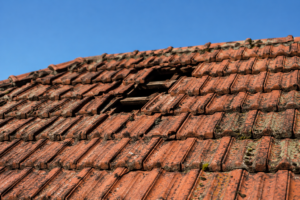
However, tile roofs can develop cracked tiles, moss growth, loose ridge caps, and water leaks, requiring periodic restoration.
Colorbond Roof Restoration Process
Restoring a Colorbond roof typically involves:
1. Roof Inspection
Professionals inspect the roof for rust, loose fasteners, damaged sheets, and signs of leaks.
2. Roof Cleaning
High-pressure washing removes dirt, debris, mould, and contaminants from the surface.
3. Rust Treatment
Any rusted areas are treated to prevent further corrosion.
4. Repairs
Damaged sheets, flashing, screws, and seals are repaired or replaced.
5. Protective Coating Application
Specialised roofing coatings are applied to restore colour and improve weather resistance.
Tile Roof Restoration Process
Tile roof restoration is generally more extensive due to the nature of roofing tiles.
1. Roof Assessment
A complete inspection identifies cracked, broken, or displaced tiles.
2. Pressure Cleaning
The roof is thoroughly cleaned to remove dirt, lichen, moss, and algae.
3. Tile Replacement
Damaged tiles are replaced to ensure structural integrity.
4. Rebedding and Repointing
The ridge capping is repaired and secured with flexible pointing compounds.
5. Roof Sealing and Painting
A protective sealant and roof membrane coating are applied to improve durability and appearance.
Comparing Colorbond and Tile Roof Restoration
Durability
Colorbond roofs are highly resistant to harsh weather and generally require fewer repairs during restoration. Steel roofing performs exceptionally well against heavy rain and strong winds.
Tile roofs are durable but can suffer from cracked or broken tiles due to impact or age.
Winner: Colorbond
Maintenance Requirements
Colorbond roofs require minimal ongoing maintenance. Regular inspections and occasional cleaning are usually sufficient.
Tile roofs often require more attention due to moss growth, cracked tiles, and ridge cap deterioration.
Winner: Colorbond
Energy Efficiency
Tile roofs naturally provide excellent thermal insulation because of their density and air pockets beneath the tiles.
Colorbond roofing can become warmer in direct sunlight, although modern reflective coatings significantly improve energy efficiency.
Winner: Tile Roof
Appearance
Tile roofs offer a classic and traditional look that suits heritage and family homes.
Colorbond roofs provide a sleek, modern appearance that complements contemporary architecture.
Winner: Depends on Personal Preference
Restoration Complexity
Colorbond restorations are typically quicker because there are fewer individual components to repair.
Tile restorations may involve replacing numerous damaged tiles and repointing ridge caps.
Winner: Colorbond
Lifespan After Restoration
A professionally restored Colorbond roof can continue performing effectively for 20, 30 years or more.
A properly restored tile roof can also provide decades of reliable service, especially when maintained regularly.
Winner: Tie
Cost of Restoration
Colorbond roof restorations are generally less labour-intensive and may be more affordable depending on the roof size and condition.
Tile roof restorations can become more expensive when extensive tile replacement or repointing is required.
Winner: Colorbond
Which Roof Type Handles Melbourne Weather Better?
Melbourne is famous for experiencing four seasons in one day. Roofing materials must withstand:
- Heavy rainfall
- High UV exposure
- Wind storms
- Temperature fluctuations
- Falling debris
Colorbond roofing performs exceptionally well against wind and rain while resisting corrosion when properly maintained.
Tile roofs handle heat effectively but can become vulnerable to cracking and displacement during severe weather events.
For many Melbourne homeowners, Colorbond roofs offer superior weather resistance and lower maintenance costs.
When Should You Restore Your Roof?
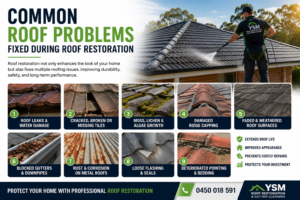
Whether you own a Colorbond or tile roof, restoration may be necessary if you notice:
- Water leaks
- Faded roof colour
- Cracked or broken tiles
- Rust spots
- Moss or algae growth
- Loose ridge caps
- Increased energy bills
- Sagging sections
- Frequent gutter blockages
Early intervention can prevent costly structural damage and extend the lifespan of your roof.
Professional Roof Restoration Matters
While DIY roof repairs may seem cost-effective, professional restoration ensures:
- Thorough inspections
- Correct repair methods
- High-quality materials
- Long-lasting results
- Safety compliance
- Warranty protection
Experienced roofing specialists can identify hidden problems and provide tailored restoration solutions based on your roof type and condition.
Final Verdict: Colorbond vs Tile Roof Restoration
There is no universal answer because the best choice depends on your property’s style, budget, and maintenance preferences.
Choose Colorbond Roof Restoration if you want:
- Lower maintenance
- Modern aesthetics
- Strong weather resistance
- Faster restoration
- Cost-effective long-term performance
Choose Tile Roof Restoration if you want:
- Traditional appearance
- Superior insulation
- Heritage-style appeal
- Long-term durability with proper maintenance
Both roofing systems can provide decades of protection when professionally restored. The key is working with experienced roofing specialists who understand Melbourne’s unique climate and can recommend the most suitable restoration approach for your property.
At YSM Roof Restoration and Gutter Cleaning, we specialise in both Colorbond and tile roof restoration services across Melbourne. Our expert team delivers high-quality workmanship, premium materials, and reliable solutions designed to keep your roof performing at its best for years to come.